
Best Native Australian Plants for Low-Maintenance Gardens
Why Choose Native Australian Plants?
Native plants have evolved over thousands of years to thrive in Australian conditions. Compared to exotic species, they typically:
- Need far less water once established (critical given Australia's dry climate)
- Require less fertiliser — most are adapted to low-nutrient soils
- Attract native wildlife — birds, bees, and butterflies love them
- Are more pest and disease resistant
- Cost less to maintain long-term
Best Native Plants by Garden Type
For Sunny, Dry Gardens
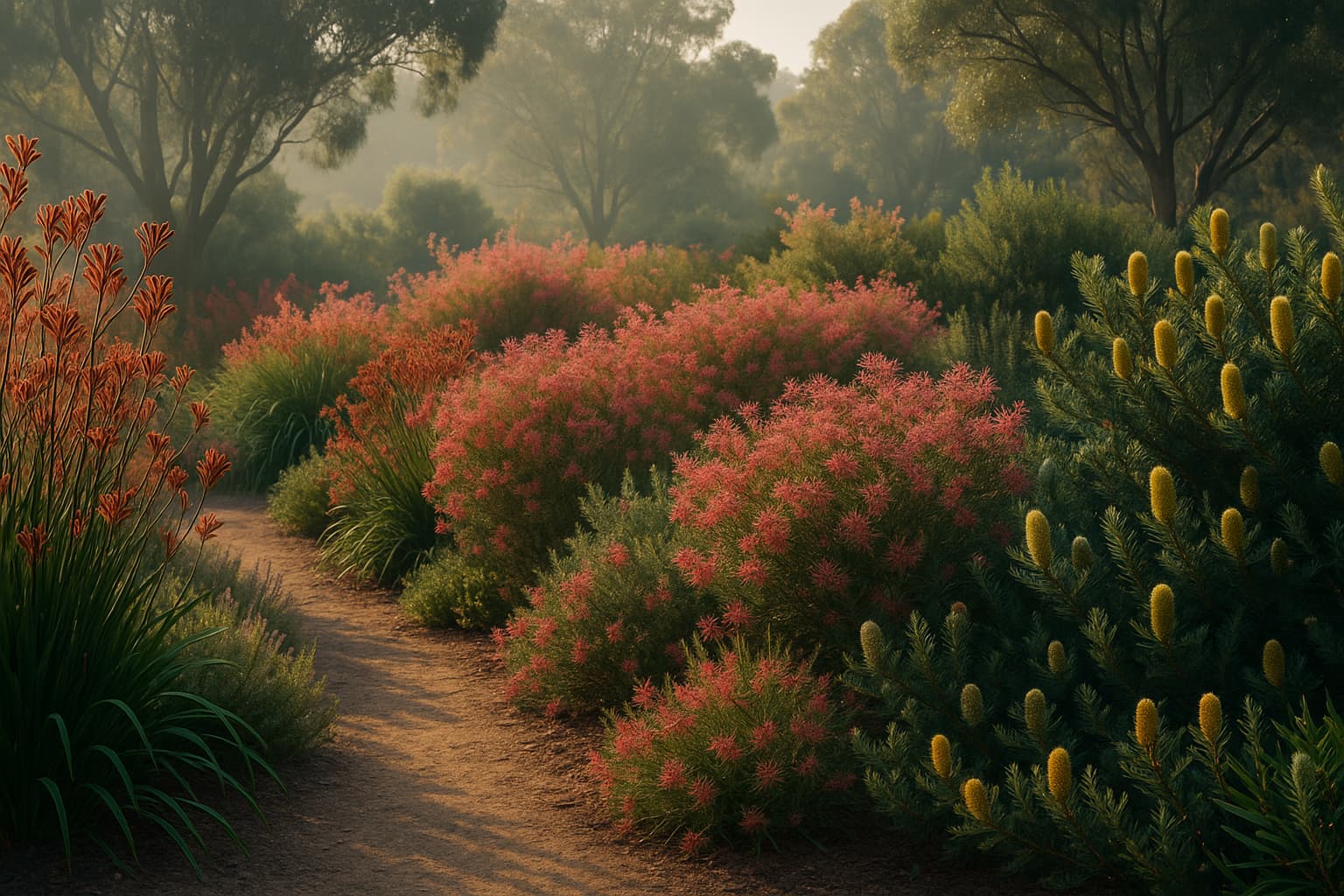
Kangaroo Paw (Anigozanthos) Perhaps the most iconic Australian garden plant. Available in dozens of colours, kangaroo paws grow 30cm–2m tall and flower prolifically in spring. Perfect for borders and pots. Needs good drainage.
Grevillea With over 360 species, you'll find a grevillea for almost any space. Low-growing forms (like 'Prostrate Spider Flower') work as groundcovers; larger varieties like 'Robyn Gordon' become impressive feature shrubs. Honeyeaters love them.
Westringia (Coastal Rosemary) A tough, fast-growing shrub that looks like rosemary but is far more resilient. Perfect for hedges, borders, or coastal gardens. Handles drought, salt wind, and light frost.
For Shaded or Part-Shade Gardens
Lomandra (Mat Rush) Possibly the most versatile native of all. Lomandra forms dense, grass-like clumps that handle shade, drought, waterlogging, and salt. Excellent for erosion control, massed plantings, and low hedges. Virtually indestructible.
Native Violet (Viola hederacea) A delightful groundcover for shaded spots. Spreads quietly, flowers almost year-round in frost-free areas, and tolerates foot traffic. Great under trees.
Tree Fern (Cyathea and Dicksonia species) For deep shade with moisture, tree ferns create a lush, prehistoric feel. Slow-growing but stunning. Best in sheltered spots away from dry winds.
For Rainwater Gardens and Wet Areas
Swamp Paperbark (Melaleuca quinquenervia) Handles boggy, poorly drained soils that would kill most plants. Beautiful papery white bark and cream bottlebrush flowers. Grows 5–10m — best for larger gardens.
River Bottlebrush (Callistemon sieberi) Loves moist soils near water features or in low-lying areas. Attracts honeyeaters and produces striking red or cream brushes in spring.
For Attracting Wildlife
Banksias Banksias are wildlife magnets — their large flower cones provide nectar for honeyeaters, and the old cones make nesting hollows for small animals. Coastal Banksia (B. integrifolia) is one of the most adaptable.
Native Frangipani (Hymenosporum flavum) A medium-to-large tree with fragrant yellow flowers loved by butterflies and bees. Excellent as a screen or shade tree.
Tips for Planting Natives
- Match the plant to your soil — check whether your soil is clay, sandy, or loam
- Plant in autumn or winter — roots establish during the cool, wet months before their first summer
- Mulch heavily — 7–10cm of coarse mulch retains moisture and suppresses weeds
- Don't over-water — most natives die from overwatering, not underwatering
- Avoid high-phosphorus fertilisers — they can kill proteaceous plants (Grevillea, Banksia, Waratah)
Need Help with Your Native Garden?
A skilled landscaper can design and plant a native garden that looks amazing from day one. Find native garden specialists near you on Tradiely.
Find trusted landscapers near you
Compare verified reviews and get free quotes. No sign-up required.